 Analysis of 28 U.S. acquisition events recorded by Fundz in Texas from Jan 2–18, 2026 (UTC) shows a clear shift toward capability-led buying, with operators adding adjacent services, operational depth, or software/risk capabilities rather than pursuing scale alone.
The immediate implication is that the next 30–60 days will be defined less by “more deal announcements” and more by integration decisions: standardizing systems, rationalizing vendors, and reorganizing operating cadence.
Executive summary (BLUF)
Fundz logged 28 acquisition events (Unlock Full List) in the period with 28 unique acquirers (no repeat buyers within the window). Activity occurred on 12 of 17 days, peaking on Jan 6 with six recorded acquisitions. Acquirer activity is highly concentrated in Dallas and Houston (nine each), with Austin next (three), and a long tail of other Texas cities making up the remainder.
- Dallas + Houston account for 18 of 28 acquirers (64%), creating a two-node consolidation map inside Texas.
- The theme mix is led by Energy and Industrial (six each), but B2B services (five) and Software/IT (four) are meaningful, consistent with capability buying.
- Fundz also includes a “track what happens next” layer: 73 related contacts across 25 of 28 acquirers, and 56 of 73 (77%) are C-suite or President-level roles.
The named trend: The Texas Capability Tape
This window reads like a tape of operators “completing the stack.” Instead of a single consolidator making repeated purchases, multiple buyers made single moves across energy, industrial, services, and software, exactly the pattern you’d expect when competitiveness depends on execution capability (delivery, compliance, reporting, and operational control), not just footprint.
The three anomalies (Gap, Hotspot, Pivot)
.png?width=550&height=367&name=The%20three%20anomalies%20(Gap%2c%20Hotspot%2c%20Pivot).png)
- Gap: Repeat acquirers are absent in this 17-day window (28 events, 28 unique acquirers). That’s unusual for true roll-up cycles and points to a more distributed, operator-led market.
- Hotspot: Dallas and Houston tie at nine acquisitions each, forming the clear center of gravity for acquirer activity.
- Pivot: The tape includes a meaningful software/risk layer alongside industrial and energy adjacencies, capability buying, not just capacity buying.
Anchor visual: City group × theme (deal count)
The theme classification below is derived from the acquirer Industry field in Fundz company records.
| City group | Energy | Industrial | B2B services | Software/IT | Health/Bio | Consumer/Hospitality | Real estate | Aerospace | Total |
|---|---|---|---|---|---|---|---|---|---|
| Austin | 0 | 0 | 0 | 2 | 1 | 0 | 0 | 0 | 3 |
| Dallas | 2 | 1 | 2 | 1 | 0 | 2 | 1 | 0 | 9 |
| Houston | 2 | 3 | 1 | 1 | 1 | 0 | 0 | 1 | 9 |
| Other TX | 2 | 2 | 2 | 0 | 0 | 0 | 1 | 0 | 7 |
| Total | 6 | 6 | 5 | 4 | 2 | 2 | 2 | 1 | 28 |
Source: Fundz.net • Period: Jan 2–18, 2026
Subscriber Tip: Fundz members can view the specific companies and executive contacts behind these numbers. Start your search here.
Verified deal highlights (named pairs, corroborated)
To add authority without overstating what the dataset can guarantee, we only name acquirer–target pairs here when corroborated by company disclosure or reputable reporting.
- Cactus completed the acquisition of a 65% controlling interest in Baker Hughes’s Surface Pressure Control business (SPC). Disclosure
- USA Compression Partners completed its acquisition of J-W Power Company, with total consideration of approximately $860 million. Disclosure
- VLS Environmental Solutions acquired Merichem Company’s Caustic Services business, noting integration and renaming. Disclosure
- Diligent acquired 3rdRisk to deliver AI-native third-party risk management at scale. Disclosure
- PrimeSource Brands acquired Advantage Industries, describing the deal as part of its ongoing acquisition program. Disclosure
- Intuitive Machines completed its acquisition of Lanteris Space Systems. Disclosure
- HF Sinclair closed its previously announced acquisition of Industrial Oils Unlimited (IOU). Disclosure
Why this matters (disciplined “so what”)
The most useful read of this tape isn’t “how many deals happened.” It’s what these deals force next.
- Capability buying predicts operational change: When acquirers buy a capability, integration work typically touches reporting cadence, tooling, vendor sets, and operating processes, even when deal terms are undisclosed.
- Two metros imply two consolidation playbooks: Dallas reads more multi-sector with a visible services layer, while Houston tilts toward energy and industrial adjacency. That split often predicts different second-order signals.
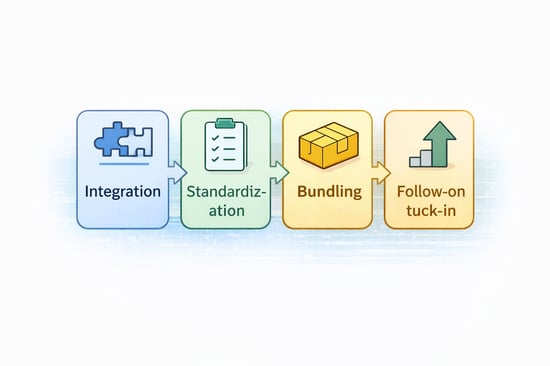
- Second-order signals will be more predictive than headlines: In a tape with no repeat acquirers, the next 30–60 days reveal who is building a platform versus making a one-off move, watch for integration leadership, system standardization, bundling language, and a second adjacent acquisition.
In a recent Venture Capital snapshot, we looked at how capital flowed in the first two weeks of 2026 and what that reveals about sector momentum, providing useful context alongside this Texas deal tape.
How to use this tape (without overclaiming)
If you’re using M&A as market intel, treat each deal as a trigger, not a conclusion. A practical way to interpret an acquisition event is to ask: “What did the buyer just add that they didn’t have?” Then track proof they’re operationalizing it.
- A Houston-based industrial operator buying a niche services capability often triggers a 30–60 day period of standardization (reporting, compliance, vendor overlap). Use FundzWatch™ alerts to detect when they start hiring for compliance roles.
- A Dallas-based B2B services acquirer often delivers value through packaging changes (bundles, enablement, cross-sell motions) within 1 to 2 quarters.
- A software/risk capability acquisition can signal a push to formalize governance and third-party oversight, especially when buyers are scaling into more regulated customers.
About the data
Figures reflect Fundz acquisitions and companies' records for Jan 2–18, 2026, and are verified against company disclosures and reputable sources, as cited. Totals may change as late filings are received.
Data methodology
- Scope: 28 U.S. (Texas) acquisition events recorded by Fundz between Jan 2–18, 2026 (UTC).
- Validation: Aggregate counts and classifications are from Fundz records; named pairs are included only when corroborated by disclosure/reputable sources (linked inline).
- Normalization: Deal counts reflect Fundz records; financial terms are included only when disclosed externally.
- Limitations: Some transactions have undisclosed terms; acquiree metadata may be incomplete in this extract; late disclosures and entity-matching updates can shift totals.
Texas M&A Deal Tape FAQs

What does Fundz mean by an “acquisition event” here?
An acquisition event is an M&A transaction logged in Fundz's acquisitions records for the period. This report focuses on events with Texas-based acquirers present in the Fundz company dataset.
Why doesn’t this list every named acquirer–target pair?
This tape is designed to be accurate even when entity matching can vary across sources. We only name pairs when corroborated by company disclosure or reputable reporting; the broader totals and classification come from Fundz records.
What’s the single best follow-on signal to watch?
Integration behavior. Hiring for integration leadership, standardising systems, and evidence of bundling/cross-selling are often more predictive than the initial announcement.
Disclosure
This report is for informational purposes and is not investment, legal, or tax advice.
Author’s note: If you want the most reliable read on consolidation, don’t stop at the headline. Track what the buyer must change next: systems, reporting, vendors, and packaging. That’s where the Texas Capability Tape becomes predictive.