 Buying firewalls, endpoint protection, multifactor authentication, backups, and security monitoring does not automatically make a company secure. Exposure often persists because no one is entirely sure who configures each control, who reviews it, who responds when it fails, or who can prove it is still working.
That uncertainty becomes harder to manage when responsibility is divided among internal IT, security specialists, cloud vendors, software providers, and managed service partners. Each party can finish its assigned work while assuming someone else owns the gaps. On paper, the security program still looks layered. In practice, it becomes fragile.
Key Points: Turning Security Controls Into Accountable Work
Cybersecurity becomes more dependable when every important control has an owner, an operator, a reviewer, and a clear escalation path.
Key points include:
- Operational ownership: Security tools do not manage themselves; settings, exceptions, alerts, and evidence all require ownership.
- Accountability: A control owner remains answerable for the outcome even when another team or provider performs the work.
- Handoffs: Security gaps can appear where work passes between people, systems, and vendors.
- Evidence: Review records, tickets, logs, and recovery tests help show whether a control is operating.
- Provider boundaries: Contracts should define responsibilities, escalation, documentation, and exit arrangements in operational terms.
Security Layers Do Not Manage Themselves
Layered security is designed so that one safeguard can still limit damage when another fails. Identity controls can limit account misuse. Endpoint tools can block malicious activity. Network controls can restrict movement. Backups can support recovery when prevention fails.
Every layer also creates operational work. Someone has to approve access rules, maintain device coverage, review alerts, apply patches, investigate exceptions, test backups, and decide when an issue becomes an incident. Without named responsibility, those tasks are easily delayed or missed.
This is why the NIST Cybersecurity Framework 2.0 added a distinct Govern function. NIST says it was introduced to emphasize cybersecurity governance, including setting risk tolerances, defining roles and responsibilities, establishing policies, and aligning cybersecurity with enterprise risk management and legal obligations.
The framework makes an important practical point: protection is not only a technical activity. It also depends on decisions, accountability, and oversight.
For every important safeguard, leaders should ask one blunt question: Who answers for it when it stops working? A tool owner, system administrator, or service provider may run the control day to day, but someone inside the business still needs to own the outcome.
Separate Ownership From Operation
Security work does not have to sit with one person. Growing companies often use specialists or managed providers for monitoring, patching, endpoint administration, cloud configuration, or incident support. What matters is the distinction between operating a control and owning its result.
Under this practical model, the owner sets the intended outcome, scope, acceptable exceptions, review cycle, and response to failure. The operator handles the routine work. A reviewer checks that the control is actually working and that the evidence supports the claim.
A company researching managed services and considering hiring All In IT should assess the proposed service against that division of responsibility. The evaluation should establish which controls the provider operates, which decisions remain with the client, how exceptions are approved, and who is accountable when service boundaries overlap.
This distinction matters because a provider can complete the task it was hired to perform while the client assumes the wider risk has been handled. A patching service may deploy updates without owning unsupported software. A backup provider may complete scheduled jobs without confirming whether critical applications can actually be restored. A security platform may generate alerts without anyone being authorized to contain the affected system.
A provider page may use customer testimonials to support the statement that businesses trust Alltek, but buyers should translate that trust into verifiable operating questions. They need to know how the provider documents responsibilities, communicates unresolved risks, preserves evidence, handles urgent escalation, and returns control of records and credentials if the relationship ends.
Build a Control Ownership Register
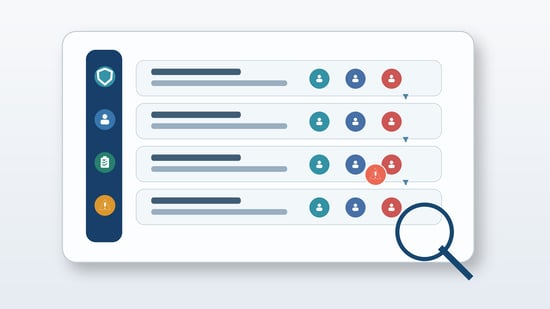
Start small. A control ownership register can be a simple working record that connects each important safeguard with the people, systems, and evidence behind it.
For each control, record:
- The business or security outcome the control is meant to achieve.
- The systems, data, users, and locations within scope.
- The accountable owner and day-to-day operator.
- The review frequency and evidence that should exist.
- Known exceptions, temporary workarounds, and accepted risks.
- The escalation route when the control fails or falls outside tolerance.
This record should connect with existing operational information rather than sit in isolation. Integrated asset and service records can give IT teams a clearer view of devices, applications, incidents, changes, and ownership. The same principle strengthens cybersecurity: teams will struggle to assign or verify controls around systems they cannot reliably identify.
Its value becomes clear when the gaps surface. A business may discover that endpoint protection covers company laptops but not contractor devices, that backup ownership stops at the cloud platform, or that no one reviews privileged accounts after employees change roles. Those findings say far more than a generic statement that the company has “layered security.”
Examine the Handoffs Where Security Work Can Fail
Technology is not always the weak point. A control may fail because a product is misconfigured, but it can also fail because work crosses a boundary and the handoff is incomplete.
Onboarding and offboarding make the problem easy to see. HR may confirm a start or departure date, a manager may request access, IT may create or disable accounts, and application owners may manage specialist systems. Without one person overseeing the complete process, former employees can retain access or new hires can receive more privileges than their roles require.
Patching can unravel in the same way. An IT provider may manage operating-system updates, while individual departments own specialist applications and vendors maintain hosted platforms. A vulnerability can remain unresolved because every party assumes it sits outside its scope.
Backups are another place where activity can be mistaken for an outcome. A dashboard may show successful jobs, but recovery still depends on knowing which data matters, how quickly it must return, which dependencies are required, and who can authorize restoration. A tested recovery process is stronger evidence than a green status icon.
Logging and incident response involve several handoffs at once. Tools collect events, analysts review alerts, internal leaders decide whether operations should be interrupted, legal or communications teams may manage disclosure, and technical teams contain and recover systems.
NIST's current incident-response guidance treats response as part of the wider cybersecurity risk-management process rather than a standalone technical phase. That reinforces the need for clear roles before an incident begins.
Make Evidence Part of the Control
Evidence should emerge from normal operation, not be assembled at the last minute. Without it, leaders are left with verbal reassurance, screenshots gathered before an audit, or assumptions based on a contract.
The evidence will vary by control. It might be an approved access review, a patch-compliance report, an alert investigation record, a successful restore test, a ticket showing that an exception was closed, or a change record linking a configuration update to an authorized request.
The goal is not more paperwork. Evidence should help the business answer three practical questions:
- Is the control covering what leadership believes it covers?
- Is someone reviewing failures, exceptions, and overdue work?
- Can the company demonstrate what happened before and after an incident?
This is where broader risk governance matters. Effective strategic risk management depends on leadership commitment, consistent documentation, continuous monitoring, and regular risk review. Cybersecurity control evidence turns those principles into operational information that executives can assess and act on.
Use Service Management to Close Security Gaps
Much of this work arrives disguised as ordinary IT administration. An employee requests software. A device is replaced. A privileged account is created. A configuration changes. A recurring fault reveals an unsupported system. Treating those activities as separate from cybersecurity makes ownership harder to see.
A mature service-management process links the request, affected asset, approver, change, control requirement, and resulting evidence. This does not require a complex enterprise platform. It simply means security-relevant work should leave a reliable trail and reach the correct owner.
Exceptions need the same discipline. When a team cannot apply a control as designed, the exception should have a reason, an owner, an expiration date, and a compensating measure. Permanent exceptions hidden in email threads are not managed risk; they are forgotten risk.
Strong cybersecurity planning identifies key threats, integrates security into daily operations, clarifies cloud responsibilities, and communicates incident-response roles. These practices become more consistent when tied to operational workflows rather than treated as occasional security projects.
Test the Handoffs, Not Only the Technology
A firewall test may confirm that traffic is blocked, and an endpoint check may show that an agent is installed. Neither test necessarily shows whether the organization can act when the tool identifies a problem.
Tabletop exercises and operational walk-throughs should therefore test the handoffs around the control. Who receives the alert? Who can isolate a device? Who contacts the provider? Who decides whether customer-facing systems should be taken offline? Who preserves evidence? Who updates leadership?
The same approach works outside incident response. Select a departing employee and trace every account that should have been removed. Choose a critical application and follow its backup through a restore test. Pick an overdue vulnerability and examine how ownership, risk acceptance, and remediation were recorded.
What these exercises uncover is often surprisingly ordinary: an out-of-date contact list, an approval bottleneck, incomplete asset records, provider access that depends on one employee, or a contract that does not define emergency authority.
Measure Accountability, Not Tool Count
Counting security products is easy, but the total says little on its own about protection. More useful measures show whether controls are being operated consistently and whether failures are being resolved.
Useful indicators include:
- The percentage of critical controls with a named owner and current scope.
- The number and age of unresolved control exceptions.
- The share of critical assets covered by required safeguards.
- The time between a failed control and an assigned response.
- The completion rate for access reviews, restore tests, and incident exercises.
- The number of unresolved responsibility gaps across provider boundaries.
These measures help leaders direct attention toward weak operating practices instead of assuming that another purchase will close the gap.
Turn Layered Security Into an Operating Model
The practical test is not whether every security layer exists, but whether the business can show who runs it, who reviews it, and what happens when it breaks.
That requires clear ownership, documented provider boundaries, evidence created through normal work, and exercises that test real decisions. Without those elements, the layers remain a diagram rather than an operating model.
Questions Leaders Ask About Cybersecurity Control Ownership
What is a cybersecurity control owner?
A control owner is the person who can approve the control's scope and exceptions and must answer when it underperforms. That is different from the operator, who handles the day-to-day work, and the reviewer, who checks the evidence.
Can an MSP own all of a company's cybersecurity controls?
An MSP can take on substantial operational responsibility, but the company still decides its risk tolerance, priorities, legal obligations, and exceptions. The contract should identify those retained decisions and the provider's authority during normal service and emergencies.
How often should control ownership be reviewed?
Review ownership whenever systems, providers, regulations, or organizational roles change, as well as during the regular governance cycle. High-impact controls and unresolved exceptions may need closer attention.
What evidence shows that a cybersecurity control is working?
Good evidence is current, traceable to routine work, and tied to a specific control. It should show coverage, review, failure handling, or recovery. A policy, contract, or last-minute screenshot may describe the intended process without proving that it operates.
Where should a small business start?
Begin with the controls tied to the most damaging outcomes: privileged access, critical-system patching, backups and recovery, account removal, security alerts, and incident escalation. For each one, name an owner, define the scope, and decide what evidence should exist.