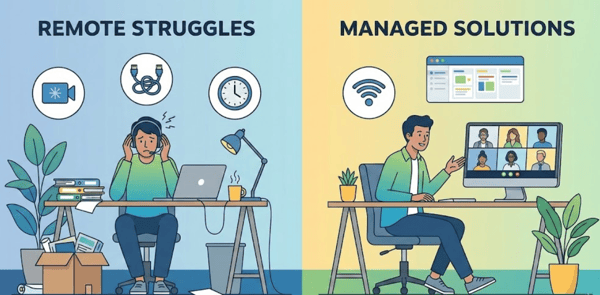
 Remote work has become a core part of how many growing companies operate. It offers flexibility, helps businesses hire beyond their local market, and creates room for faster scaling. Yet as teams expand and responsibilities multiply, the challenges of managing distributed employees become clearer. Miscommunication, technology issues, lowered productivity, and cultural drift can all have an effect on growth.
These problems are not unusual, and many businesses face them as their teams evolve. The better part, however, is that every challenge comes with a workable answer. When the right steps are taken, your remote team can stay productive, connected, and confident in their responsibilities.
This article highlights the key struggles you may face while managing a remote team and offers clear, structured ways to address them.
1. Communication Gaps Across Distributed Teams
Communication changes dramatically once a team becomes fully or partially remote. Without face-to-face interaction, tone becomes harder to interpret, updates may feel scattered, and important context can slip through the cracks. As your team grows, these small miscommunications can snowball into delays, repeated work, and frustration on both sides.
How to Manage It
Clear, structured communication helps smooth out these gaps. Prioritise video calls for important topics so your team can share visual cues, clarify questions, and connect more naturally. Encourage written follow-ups so decisions and key points stay documented for everyone to revisit. This simple combination reduces confusion and keeps the whole team aligned.
It also helps to set shared communication expectations. Define response time guidelines, choose consistent communication channels, and establish a rhythm for check-ins or team updates. When your employees know where to look for information and how to share it, collaboration becomes steadier and far more reliable.
2. Technology Limitations That Interrupt Workflows
 Technical limitations continue to be one of the biggest hurdles for remote teams. Lagging video calls, missed calls, frozen screens, slow uploads, and unexpected disconnections can break the flow of a workday. When several employees face these issues at the same time, collaboration slows down and essential tasks begin to pile up. Over time, these disruptions affect productivity, client communication, and the overall stability of your operations.
How to Manage It
The root cause behind these disruptions is often a traditional broadband connection that simply cannot keep up with the demands of a modern, scaling business. Therefore, a stronger digital foundation is the most effective way to reduce interruptions.
Encourage your team to move away from older broadband setups and upgrade to fiber internet instead. Since fiber uses light-based transmission, it delivers much faster speeds, stronger reliability, and more stable performance during peak hours.
When supported by trusted providers such as Frontier fiber internet, they also gain access to gigabit speed plans that can reach up to 7 gigs. This level of bandwidth allows them to work without pauses or delays. They can collaborate smoothly, join meetings without disruption, and access essential tools with confidence.
3. Maintaining Productivity and Accountability
Remote teams often enjoy freedom in their workday, but without structure, that freedom can become overwhelming. Distractions at home, unclear priorities, and a lack of visibility can make productivity inconsistent. Managers may also feel unsure about how to track progress without slipping into micromanagement, which only adds pressure for everyone involved.
How to Manage It
Creating clear workflows is one of the strongest ways to support productivity. Define task ownership, set realistic timelines, and establish a shared project management system so everyone sees what needs to be done. This reduces confusion and helps each team member stay focused on the right priorities throughout the day.
Encouraging simple habits also makes a difference. Suggest time-blocking techniques for focused work sessions, followed by regular breaks to avoid burnout. Shift attention toward outcome-based evaluations instead of hours worked. When your employees understand what success looks like and feel trusted to reach it, productivity becomes more sustainable and self-driven.
4. Protecting Company Culture and Human Connection
 As your team grows, maintaining a strong sense of culture becomes one of the biggest challenges in remote work. Employees may feel isolated, disconnected from the mission, or unsure where they fit within the larger picture. New hires, especially, may struggle to build relationships or understand your company’s values without the natural interactions that come with a physical workspace.
How to Manage It
Building connection intentionally strengthens your culture even from afar. Schedule regular team check-ins that allow space for personal conversation alongside work updates. Introduce thoughtful onboarding practices that explain your values, expectations, and communication norms clearly to every new team member. These small steps help employees feel welcomed and supported from day one.
You can also create ongoing rituals that reinforce belonging, such as weekly roundups, informal virtual hangouts, or shared milestone celebrations. Encourage managers to show warmth and transparency so employees feel comfortable engaging. When people feel connected to their team, they are more motivated, collaborative, and committed to their work.
Closing Lines
Remote work offers tremendous advantages, but it also brings challenges that can affect how smoothly your business grows. By strengthening your communication practices, improving your digital infrastructure, shaping clear routines, and nurturing meaningful connections, you can build a remote environment that supports your team at every stage.
Just make sure to choose systems and habits that reinforce clarity, stability, and trust. With the right structure in place, your team can thrive from anywhere.