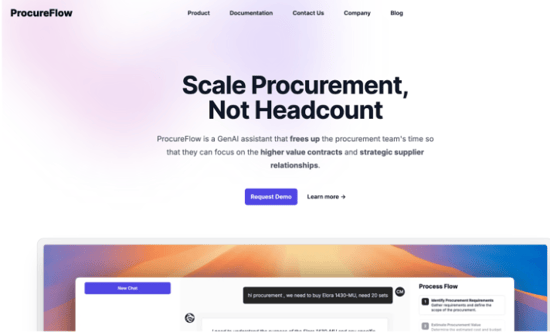
Purchase intelligence platforms revolutionize how organizations handle procurement by turning vast amounts of buying data into actionable insights.
These tools empower teams to make smarter decisions on sourcing, spending, and supplier management, driving cost savings and operational agility.
Early adoption of smart analytics for buying and sourcing sets the foundation for long-term competitive advantage.
What Are Purchase Intelligence Platforms?
Purchase intelligence tools aggregate procurement data from invoices, purchase orders, and contracts, and provide deep analytics of spend using advanced analytics techniques.
In addition to classical spend analysis, these solutions may incorporate automated spend categorization, spend anomaly detection, and forecasting.
These platforms integrate with existing systems to provide a single dashboard for real-time data on supplier performance, risk, and market trends, among others.
Procurement leaders can anticipate supply chain disruptions and alter plans using this data.
For example, identifying a business that overpays a vendor and uses it sparingly creates budget margin for ProcureFlow, and this shift to a proactive role makes departments value creators.
Core Benefits of Adopting These Platforms
Organizations see an immediate return on their investment in waste reduction, which saves them double-digit costs through better contracting.
Greater visibility allows maverick spending (unapproved spending that exceeds budgets) to be identified. Suggestion-based compliance features reinforce contract adherence.
Supplier intelligence modules calculate supplier scores for reliability, pricing, and risk, and predictive forecasting reduces stock and overstock, finding a balance between supply and demand.
Additionally, teams operating with these insights can make faster decisions by automating manual data analysis, allowing businesses to scale operations without adding personnel during busy periods or periods of growth.
Essential Features to Prioritize
Search for platforms that use machine learning algorithms to classify spend from multiple data sources, and that provide real-time dashboards that allow drilldown from overview dashboards to the transaction level.
Integration APIs integrate with enterprise resource planning (ERP) and finance systems to prevent information silos.
Supplier risk scoring also includes other factors such as financial or geopolitical risks.
These include natural language, collaborative, and mobility capabilities that allow users to get quick answers with simple questions, solicit input from across teams, or approve items from anywhere.
Analytics and Automation Capabilities
AI-enabled contract analysis can identify risks or opportunities for optimization, while dynamic pricing uses intelligence on commodity price fluctuations for timely purchasing.
For example, anomaly detection identifies spikes in spend or other cases for immediate intervention.
In another scenario, scenario simulation assesses the impact of supplier changes or volume variations.
Strategies to Maximize Platform ROI
Start with a spend audit to baseline current inefficiencies across departments and categories.
Review underperforming suppliers quarterly through platform scorecards and renegotiate contracts accordingly.
Automate approvals and alerts, reduce manual workloads, and automatically and anonymously compare pricing and terms with peer organizations.
Add feedback loops that enable the system to learn from users and improve its recommendations.
Pilot this solution in one area first to get early benefits, such as lowering total supply chain costs.
- Conduct regular data cleansing to maintain accuracy.
- Train teams on self-service analytics for empowerment.
- Align KPIs with business goals, such as cycle time reductions.
- Simulate disruptions to build resilience.
Build vs. Buy Decision Framework
While in-house building can provide tailored functionality, it can also be resource-intensive.
Off-the-shelf platforms are faster to deploy, already proven, and vendor-supported.
| Decision Factor | Build In-House | Buy Ready-Made |
|---|---|---|
| Deployment Time | Several months | Weeks to months |
| Upfront Investment | High (team and tech) | Subscription-based |
| Flexibility | Fully customizable | Highly configurable |
| Ongoing Support | Internal responsibility | Included updates |
| Risk Level | High (delays, overruns) | Low (mature solutions) |
| Scalability | Requires planning | Built-in cloud elasticity |
Buying suits most scenarios for speed and reliability, especially when integrating smart analytics for buying and sourcing accelerates value realization.
Overcoming Implementation Challenges
Data cleansing must initially be done for legacy sources, but this is usually built into the platform.
Deal with user resistance by showing the platform.
-
Phased adoption (e.g., visibility first, followed by predictions) builds buy-in.
-
Executive sponsorship connects the focal use of the tool to cost targets.
-
Establish data governance from day one with role-based access to prevent data breaches.
-
Measure adoption and usage metrics and iterate based on feedback.
Advanced Techniques for Procurement Leaders
Utilize AI for past purchase analysis, source competitive pricing for new purchases by comparing similar products, and reduce wasted time in the team workflow.
-
Sustainability scoring ranks suppliers on environmental impact and helps meet ESG goals.
-
Ledgers on the blockchain improve transparency and trust along chains.
-
Collaborative portals and IoT integration aid in forecasting through visibility of inventory levels to avoid stockouts.
Measuring and Sustaining Success
These measures include category savings, supplier rationalization, reduced process cycle times, and return on investment (ROI) for generated savings. User surveys provide feedback for product improvements. Industry benchmarks identify performance gaps.
Recurrent training allows for skills to be kept up-to-date. Those who succeed earn 15-20% a year, treating the platform as a living tool that responds to market conditions.
Future Trends Shaping Procurement
Conversational AI enables asking questions, e.g., "top risks next quarter", democratizing data access. Edge computing enables quick data processing and timely insights.
Hyper-personalization will use a context of the workplace, tighter ERP integrations, and predictive ethics to combat bias in AI. Choose an extensible platform for buying and sourcing activities and invest in smart analytics to adapt faster to a changing operating environment.