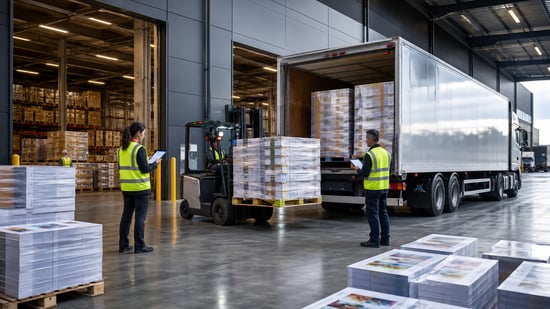
 Meeting massive commercial print deadlines demands a sophisticated logistics network. Standard distribution systems easily crumble when faced with high volume industrial orders that require rapid turnaround times. Businesses need highly structured supply chains that transition from production to destination without experiencing any delay.
Traditional parcel delivery methods struggle to process heavy, oversized cargo efficiently. These basic postal services fail to handle bulk shipments, causing massive localized bottlenecks. Reliable commercial suppliers coordinate directly with national freight carriers to guarantee seamless long-distance transport across busy regional corridors.
This specialized coordination ensures that promotional materials bypass standard transit hubs entirely. Marketing teams secure tight schedules and preserve limited budgets by partnering with a manufacturer capable of executing wholesale sign printing. This optimized approach turns logistical challenges into predictable, highly efficient business victories.
Streamlining Output at the Source
Processing high-volume jobs always requires a seamless transition from manufacturing to final packaging. Centralized production hubs reduce unnecessary handling times by prepping items immediately as they roll off the machinery. This rapid preparation workflow eliminates standard bottlenecks on the busy manufacturing floor.
Crew members pack finished materials right at the assembly line to prevent backlog buildup. Rather than transferring bulky items across warehouse departments, everything gets organized into uniform shipments immediately. This quick process ensures that finished products never sit idle waiting for distribution.
Speed on the production floor directly dictates how fast trucks hit the open road. Utilizing an integrated packing workflow keeps operations moving at a steady pace without requiring extra labor. This efficient organization ensures cargo remains ready for transport the moment printing wraps up.
Maximizing Travel Through Cargo Consolidation
Shipping individual bulk orders separately quickly drives up costs and increases the likelihood of long delays. Freight consolidation solves this physical puzzle by grouping regional deliveries together into single, large shipments. This smart strategy keeps trucks full and moving toward high priority regions.
Merging diverse cargo bound for the same general area optimizes space inside every trailer. This cooperative logistics model reduces overall fuel expenses while keeping critical shipping lanes active and reliable. Regional distribution points receive consolidated truckloads far more quickly than isolated parcel shipments manage.
Lowering the total number of transit stops prevents unnecessary handling damage and keeps schedules accurate. Logistics coordinators easily schedule deliveries with extremely high precision when handling unified loads. This strategic alignment ensures that bulk shipments arrive at local hubs ready for rapid, final delivery.
Navigating Around Metropolitan Delays
Heavy urban traffic is a constant threat to tight delivery deadlines across the country. Commercial transport fleets bypass major city congestion by employing dedicated route planning systems that adjust dynamically. This smart software identifies bottlenecks and plans alternative paths around crowded downtown corridors.
Drivers receive updated directions in real time to avoid sudden highway construction and peak rush hours. Keeping heavy trucks on clear, secondary highways ensures that deliveries remain on schedule. This careful navigation minimizes fuel waste and avoids costly idle times on hot pavement.
Consistent movement is absolutely critical when handling massive commercial print orders with strict deadlines. Bypassing metropolitan friction keeps transport networks functioning at peak capability throughout the day. This proactive route planning guarantees that shipments arrive safely and predictably, regardless of local city traffic conditions.
Protecting Cargo with Smarter Packaging
Heavy stacks of printed materials are vulnerable to physical damage during long transport routes. Rapid acceleration, sudden highway stops, and rough gravel roads can cause pallets to slide violently. Utilizing scalable, industrial-strength wrapping materials keeps every single item locked in place securely.
Custom corner protectors and dense plastic banding prevent individual layers from bending under pressure. By distributing physical weight evenly across the entire pallet, cargo remains upright during complex transport maneuvers. This physical stability protects the delicate edges of every piece of printed media.
Preventing transit damage eliminates the frustration of costly reprints and schedule delays. Robust packaging strategies guarantee that bulk shipments arrive at their final destination in flawless condition. Investing in superior physical protection ensures that campaigns launch without facing unexpected inventory setbacks at the dock.
Where Fast-Turnaround Shipping Becomes a Campaign Advantage
Managing massive commercial campaigns requires a perfect blend of high-speed manufacturing and freight logistics. When businesses align production schedules with advanced distribution logic, complex rollouts feel entirely seamless. This careful operational planning removes the stressful guesswork that typically ruins tight corporate deadlines.
Establishing strong relationships with national freight carriers guarantees reliable transit pricing and truck availability. Having dedicated shipping partners on standby prevents sudden budget spikes when busy seasonal logistics demands peak. These reliable connections keep long-term delivery operations predictable and highly cost-effective.
Ultimately, success relies on connecting quality manufacturing directly with intelligent distribution pathways. Taking a proactive approach to shipping ensures that physical assets arrive intact and perfectly on time. This physical reliability keeps major commercial promotions on schedule and builds deep trust with clients everywhere.
Commercial Shipping Questions Businesses Should Ask Before a Fast-Turnaround Campaign

Why do fast-turnaround commercial orders need different shipping processes?
Fast-turnaround commercial orders usually involve tighter timelines, larger volumes, and higher financial consequences if delivery slips. Standard parcel workflows may not offer enough control over freight timing, packaging, routing, or regional coordination. Businesses should treat these orders as operational projects rather than routine shipments.
How can businesses reduce delays between production and distribution?
The biggest improvement often comes from preparing shipments as close to production as possible. If finished materials move through too many internal handoffs before packing, delays can build before freight even leaves the facility. Clear staging, palletization, labeling, and carrier coordination help shorten the gap between completion and dispatch.
When does freight consolidation make sense for commercial print campaigns?
Freight consolidation makes sense when multiple orders are headed toward the same region or distribution area. It can reduce handling, improve trailer utilization, and make delivery timing easier to coordinate. The trade-off is that planners need accurate regional grouping and careful scheduling so consolidation does not create a new delay point.
What should marketing teams ask suppliers before a national rollout?
Marketing teams should ask how the supplier manages production cutoffs, freight partners, shipment tracking, packaging standards, and regional delivery windows. They should also clarify what happens if weather, traffic, carrier capacity, or production delays affect the schedule. The goal is to understand the supplier’s recovery plan before the campaign deadline is at risk.
How does packaging quality affect campaign execution?
Packaging quality affects whether printed materials arrive usable, on time, and ready for deployment. Poor pallet stability, weak edge protection, or loose wrapping can lead to damage that forces reprints or compromises launch timing. For large commercial campaigns, protective packaging is part of delivery reliability, not just a warehouse detail.