 As organizations increasingly adopt distributed workforce models, the traditional perimeter-based security approach becomes less effective. The rise of remote work, cloud services, and mobile devices has dissolved the clear network boundaries that once defined enterprise security.
In this evolving landscape, Zero Trust Architecture (ZTA) emerges as a vital framework designed to address the cybersecurity challenges posed by distributed workforces. At its core, Zero Trust operates on the principle of "never trust, always verify," ensuring that no user or device is trusted by default, regardless of whether they are inside or outside the network.
Key Points: Zero Trust for Distributed Workforces
Key points to guide decisions and reduce avoidable risk.
Key points include:
- Identity First: Verify users and devices continuously, not just at login.
- Least Privilege: Limit access by role, device posture, and context.
- Segment Everything: Reduce blast radius with micro-segmentation.
- Assume Breach: Monitor, detect, and respond as if attackers are present.
- Practical Rollout: Start with high-risk apps and remote access before expanding.
Proof point: Gartner expects many enterprises to phase out traditional remote access VPNs in favor of Zero Trust Network Access (ZTNA) solutions.
The Bottom Line: Zero Trust succeeds when verification and access policy become repeatable operating discipline.
The need for such a paradigm shift is underscored by industry trends. According to Gartner, by 2025, 60% of enterprises will phase out most of their traditional remote access VPNs in favor of Zero Trust Network Access (ZTNA) solutions, reflecting the growing adoption of this security model across sectors. This shift is driven by the increasing sophistication of cyber threats and the complexity of managing access in environments where employees, partners, and devices operate from myriad locations.
The distributed nature of today’s workforce demands a shift away from legacy security models toward more dynamic, granular controls that continuously validate user and device identities before granting access to resources. This transformation requires not only updated policies and technologies but also a strategic partnership with experienced IT service providers.
Core Components of Zero Trust Architecture
Zero Trust Architecture is built upon several foundational pillars that work together to create a resilient security posture capable of defending against modern threats:
1. Continuous Verification: Every access request is authenticated and authorized based on multiple factors such as user identity, device health, and contextual information including location, time, and behavior patterns. This continuous verification process reduces the risk of unauthorized access even if credentials are compromised.
2. Least Privilege Access: Users and devices are granted the minimum level of access necessary to perform their tasks. By limiting permissions, organizations significantly reduce the potential damage caused by compromised accounts or insider threats.
3. Micro-Segmentation: Networks are divided into smaller, isolated zones to restrict lateral movement within the infrastructure. This segmentation confines attackers to limited areas, preventing widespread breaches.
4. Device Security: Comprehensive device hygiene checks ensure that only compliant and secure devices can connect to the network. This includes verifying operating system versions, patch levels, and the presence of security software.
5. Visibility and Analytics: Continuous monitoring and behavioral analytics enable real-time detection of anomalies and potential threats. This heightened visibility is critical for proactive security and rapid response.
Implementing these components effectively requires specialized expertise. Organizations frequently collaborate with cybersecurity firms, like IT security by Keytel Systems, to tailor and deploy Zero Trust strategies aligned with their unique business needs and compliance requirements.
Challenges in Implementing Zero Trust for Distributed Teams
While the benefits of Zero Trust are compelling, deploying this framework across distributed workforces presents several unique challenges:
- Complexity of Integration: Many organizations operate legacy systems and a diverse device ecosystem, making the adoption of Zero Trust frameworks complex. Integrating new technologies without disrupting business operations requires careful planning.
- User Experience: Striking the right balance between stringent security controls and a seamless user experience is essential. Overly restrictive measures can hinder productivity and lead to workarounds that compromise security.
- Scalability: Zero Trust solutions must scale efficiently to accommodate fluctuating numbers of remote users and devices, especially in organizations with seasonal or contract-based workforces.
- Cost and Resource Allocation: Initial deployment and ongoing management demand investments in technology, skilled personnel, and training. Budget constraints can impede comprehensive implementation.
Despite these challenges, the shift to Zero Trust is imperative. A Forrester Research study found that organizations adopting Zero Trust frameworks reduce their risk of data breaches by up to 50%, highlighting the tangible security benefits of this approach. Businesses often rely on providers specializing in IT managed by iMedia Technology to ensure seamless integration and management of Zero Trust principles.
Steps to Build a Resilient Zero Trust Framework
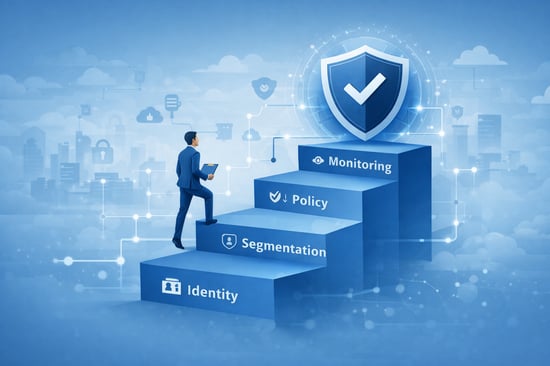 Successfully implementing Zero Trust Architecture in a distributed workforce environment requires a methodical and phased approach:
1. Assess the Current Security Posture
Begin with a comprehensive inventory of assets, users, applications, and data flows. Understanding existing vulnerabilities, access patterns, and security gaps is critical. Conducting risk assessments and mapping trust boundaries helps prioritize areas needing immediate attention.
2. Define Access Policies Based on Business Needs
Develop clear, granular policies that enforce least privilege access. Employ role-based access controls (RBAC) and attribute-based access controls (ABAC) to dynamically adjust permissions based on user roles, device status, and contextual factors.
3. Deploy Identity and Access Management (IAM) Solutions
Implement strong authentication mechanisms such as multi-factor authentication (MFA), adaptive authentication, and single sign-on (SSO). Integration with centralized IAM platforms enhances control, simplifies management, and increases visibility into access events.
4. Implement Network Micro-Segmentation
Segment networks into isolated zones to contain potential breaches and restrict lateral movement. Utilize software-defined perimeters (SDP) and network access control (NAC) tools to enforce segmentation policies effectively.
5. Ensure Endpoint Security and Compliance
Enforce device health checks and compliance policies prior to granting access. Endpoint detection and response (EDR) solutions enable continuous monitoring and rapid threat detection on devices.
6. Monitor, Analyze, and Respond
Deploy security information and event management (SIEM) systems combined with user behavior analytics (UBA) to gain real-time insights. Establish automated incident response capabilities to quickly mitigate detected threats.
Throughout these phases, partnering with specialized providers that offer comprehensive services ensures organizations benefit from expert guidance and access to cutting-edge technologies.
The Role of Automation and AI in Zero Trust
Automation and artificial intelligence (AI) are increasingly pivotal in enhancing the effectiveness of Zero Trust frameworks. Automated policy enforcement minimizes human error, ensures consistent application of security controls, and accelerates response times to incidents. AI-driven analytics improve threat detection by analyzing vast amounts of data to identify subtle behavioral patterns indicative of compromise.
A recent report from Cybersecurity Ventures projects that global spending on AI for cybersecurity will reach $42 billion by 2027, highlighting the growing reliance on these technologies to protect complex environments. The integration of AI and automation into Zero Trust not only strengthens defenses but also reduces operational burdens on security teams.
Future-Proofing Security in a Hybrid Work Landscape
As organizations embrace hybrid work models, combining remote and on-site work, Zero Trust Architecture offers a sustainable and adaptable security solution. Its principles provide the agility and scalability needed to protect sensitive data and systems while supporting business innovation.
Key considerations for future-proofing security include
- Continuous Evaluation and Adaptation: Regularly review and update security policies and controls to respond to emerging threats and changes in the workforce.
- Employee Training and Awareness: Equip employees with knowledge about cybersecurity best practices and the rationale behind Zero Trust to foster a security-conscious culture.
- Integration of Emerging Technologies: Incorporate advancements such as 5G connectivity and edge computing into the Zero Trust framework to maintain robust security across evolving infrastructures.
By embedding Zero Trust principles into organizational culture and infrastructure, businesses can confidently navigate the complexities of distributed workforces and minimize cyber risks.
Building a Resilient Zero Trust Program for Distributed Work
The transition to distributed workforces demands a resilient security approach that can dynamically respond to evolving threats. Zero Trust Architecture offers a comprehensive framework emphasizing continuous verification, least privilege access, micro-segmentation, and ongoing monitoring, elements essential for safeguarding modern digital enterprises.
Achieving successful implementation requires strategic planning, technology adoption, and collaboration with experienced IT and cybersecurity partners. Leveraging specialized services enables organizations to build and maintain robust Zero Trust frameworks that support secure and productive remote work environments.
In today’s rapidly changing cybersecurity landscape, adopting Zero Trust is no longer optional but a necessity to ensure business continuity, regulatory compliance, and data protection. Organizations that embrace this resilient framework will be better positioned to thrive in the future of work.
Zero Trust Architecture for Distributed Workforces: FAQ

What is Zero Trust Architecture in simple terms?
Zero Trust Architecture is a security model based on continuous verification rather than assumed trust. Instead of granting broad access because a user is “inside” the network, it validates identity, device posture, and context before allowing access to specific resources. For distributed workforces, this helps contain risk from compromised credentials, unmanaged devices, and remote access sprawl.
Where should implementation start?
Start with identity and access controls, especially MFA, single sign-on, and stronger role-based permissions for your most critical systems. Then prioritize remote access paths and high-value applications where a compromise would create the biggest operational or compliance impact. A phased rollout reduces disruption and gives teams time to refine policies before expanding across the environment.
Does Zero Trust replace VPNs entirely?
Not always, and it usually shouldn’t be framed as an all-or-nothing replacement on day one. Many organizations reduce dependence on traditional VPNs by introducing Zero Trust Network Access (ZTNA) for application-level access while keeping VPNs for certain legacy systems during transition. The goal is tighter, context-aware access control, not simply swapping one tool for another.
What’s the biggest implementation risk?
The biggest risk is treating Zero Trust as a one-time product purchase instead of an operating model built on policy, identity, segmentation, and monitoring. Teams often buy tools before defining access decisions, ownership, and rollout priorities, which creates complexity without reducing risk. Another common failure point is over-tightening controls too early and triggering user workarounds that undermine adoption.
How do you measure progress?
Measure progress using operational security outcomes, not just deployment milestones. Useful indicators include reduced exposure to privileged access, fewer broadly accessible network paths, faster detection and response times, and higher endpoint compliance rates. You should also track user experience metrics, such as access failure rates and support ticket volume, to ensure controls improve security without crippling productivity.