 Insurance compliance can feel like a constant battle for construction companies. Between paperwork, deadlines, and ever-changing regulations, contractors often find themselves overwhelmed by the sheer volume of requirements they must meet. Construction companies that simplify their insurance compliance processes can save time, reduce errors, and avoid costly penalties or project delays.
Key Points: Simplifying Insurance Compliance for Construction Companies
Construction insurance compliance becomes easier when teams standardize document tracking, automate repetitive checks, and treat renewals, training, and audits as recurring operational workflows.
Key points include:
- COI Control: Track certificates and endorsements before they expire to prevent subcontractor coverage from lapsing unnoticed.
- Automation Value: Compliance software reduces manual follow-up, validates coverage details, and flags gaps earlier.
- Document Access: Centralized records make audits, certificate checks, and day-to-day verification faster and less error-prone.
- Training Discipline: Regular staff refreshers help teams respond consistently as insurance requirements and regulations change.
- Audit Rhythm: Periodic reviews catch process drift before it becomes a penalty, claim issue, or project delay.
Why this matters: The article’s core recommendation is to replace ad hoc follow-up with repeatable systems for tracking, training, and review.
The Bottom Line: Construction firms reduce compliance risk fastest when insurance checks move from scattered paperwork to monitored, repeatable workflows.
Why Simpler Insurance Compliance Matters on Active Jobsites
The good news is that compliance doesn't have to be complicated. With the right strategies and tools, construction businesses can transform their approach to insurance requirements. This guide offers practical steps that help contractors manage certificates of insurance, use technology to their advantage, and create systems that make compliance easier to maintain over time.
Maintain up-to-date Certificates of Insurance (COIs) and endorsements
Construction companies need a clear system to track and manage certificates of insurance from subcontractors and vendors. These documents prove that other parties carry active coverage, which protects the general contractor from liability risks. However, COIs expire, and policies change, so companies must verify that all certificates remain current.
A strategic insurance management for contractor companies includes regular reviews of all vendor and subcontractor insurance documents. Teams should set calendar reminders before COI expiration dates and request updated certificates at least 30 days in advance.
This prevents coverage gaps that could expose the business to financial risk.
Endorsements also require attention because they modify existing policies to meet specific contract requirements. Companies should verify that endorsements match the terms spelled out in each agreement. Keep digital copies of all COIs and endorsements in an organized filing system that allows quick access during audits or claims. Regular monitoring helps construction firms avoid costly mistakes and maintain compliance with contract obligations.
Implement automated insurance compliance software
Construction companies can streamline their compliance processes by adopting software that automates insurance verification and certificate management. These digital platforms monitor policy requirements, track expiration dates, and validate coverage details without manual intervention. As a result, teams spend less time on paperwork and reduce the risk of errors that could delay projects or incur penalties.
Automated systems provide real-time alerts about coverage gaps or expired certificates. This allows project managers to address issues before they affect site operations. The software can also store and organize all compliance documents in one central location, which makes audits faster and simpler.
Companies that switch to automated solutions typically see a significant decrease in administrative work. The technology handles repetitive tasks, such as document requests and subcontractor follow-ups. Therefore, staff members can focus on more important aspects of project management rather than chasing paperwork.
Centralize documentation to streamline access and monitoring
Construction companies handle multiple insurance policies, certificates, and compliance documents across various projects and subcontractors. However, scattered files across email inboxes, filing cabinets, and different computer folders make it difficult to find what you need. A centralized digital system solves this problem by storing all insurance documents in one secure location.
This approach allows project managers and compliance teams to access any certificate or policy within seconds, rather than hours. Real-time alerts notify staff about expired policies or missing documents before they create liability issues. As a result, companies can verify subcontractor insurance faster and respond to certificate requests immediately.
Centralized storage also simplifies audit preparation. Auditors can review all necessary documents from a single platform rather than waiting for staff to gather files from multiple sources. This saves time and reduces the risk of compliance violations caused by overlooked or misplaced paperwork.
Regularly train staff on insurance requirements and regulatory changes
 Construction companies must keep their teams updated on insurance requirements and regulatory changes. The insurance landscape shifts often, and staff members need to understand how these updates affect their daily work. Regular training sessions help employees stay informed and reduce compliance risks.
Companies should schedule training at least quarterly to cover new regulations and policy updates. These sessions can include real-world examples relevant to construction projects. For instance, staff can learn about certificate-of-insurance requirements or how to handle claims properly.
Training works best when it focuses on practical applications. Employees need to know which documents to collect, how to verify coverage limits, and what steps to take if problems arise. Simple reference guides and checklists can support what staff learn during training.
Research shows that companies with regular training programs maintain better compliance records. Therefore, businesses should track which employees complete training and test their understanding. This approach helps identify knowledge gaps and prevents costly mistakes on job sites.
Conduct periodic audits to guarantee ongoing compliance
Construction companies need to regularly review their compliance programs. These internal audits help identify gaps before they become serious problems. A good practice is to schedule these reviews quarterly or at least twice per year.
During each audit, companies should ensure that their policies comply with current regulations. They need to verify that all required documentation is in place and up to date. This includes certificates of insurance, workers' compensation records, and safety protocols.
The audit process should examine both documentation and actual practices. For example, companies can compare their safety procedures on paper to what happens at job sites. This approach reveals whether employees follow the established guidelines.
Companies should document all audit findings and track any issues that surface. They can then create action plans to fix problems quickly. Regular audits also help teams stay aware of their compliance responsibilities and maintain high standards over time.
How Construction Firms Turn Compliance Into a Competitive Advantage
Construction companies can reduce risk and save time by simplifying their insurance compliance processes. Digital tools help track deadlines, verify coverage, and store documents in one central location. This approach reduces errors and helps avoid costly penalties or project delays.
Strong communication with insurance brokers and subcontractors makes compliance easier to manage. Companies that focus on clear documentation and automated systems spend less time on paperwork and more time on their core business operations.
Questions Construction Teams Ask About Insurance Compliance
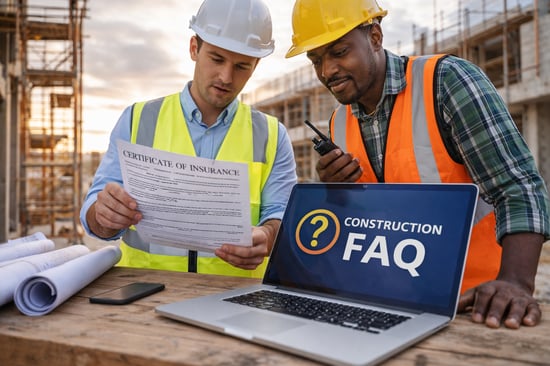
How often should construction companies review certificates of insurance?
At a minimum, companies should review COIs whenever a new subcontractor is onboarded, when a project phase changes, and well before any certificate expires. A practical rhythm is monthly spot-checking plus automated reminders set at least 30 days before renewal dates. That cadence helps teams catch coverage gaps early instead of discovering them during mobilization, an audit, or a claim.
What should teams automate first in an insurance compliance process?
The best starting point is expiration tracking, document collection, and coverage verification because those tasks create the most repetitive admin work. Automating those steps usually reduces manual follow-up and gives project teams earlier warning when a vendor falls out of compliance. Once that foundation is working, companies can expand into reporting, audit preparation, and exception workflows.
What documents should be stored in a centralized compliance system?
The core set should include COIs, endorsements, policy summaries, workers’ compensation records, subcontractor requirements, and audit notes. It also helps to keep renewal histories and internal checklists in the same system so teams can see not just current status, but how compliance has been managed over time. The goal is to make verification fast and consistent, not just to create a digital filing cabinet.
How can managers tell whether compliance training is actually working?
Training is working when staff can collect the right documents quickly, flag missing endorsements, and escalate issues without confusion. Managers should measure completion rates, spot-check knowledge retention, and look at operating signals such as fewer document errors, faster response times, and cleaner audit outcomes. If teams still rely on one expert to solve every issue, the training has not yet become operational.
What should an internal compliance audit measure beyond paperwork?
An effective audit should test whether documented procedures match what actually happens on the job. That means checking response times, exception handling, renewal follow-up, and whether teams can produce proof of coverage without scrambling. The strongest audits do not just confirm that files exist; they show whether the compliance system is reliable under real operating pressure.