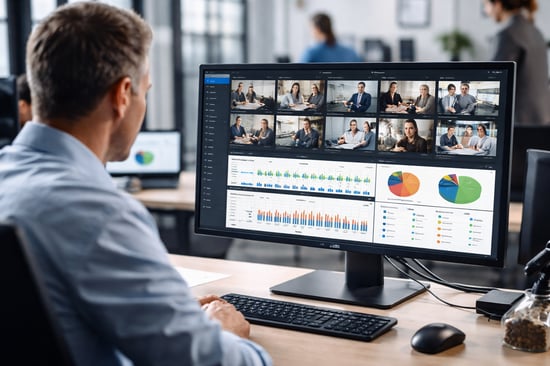
 Modern businesses increasingly rely on distributed teams, hybrid workplaces, and remote collaboration. As organizations adapt to these changes, maintaining productivity, security, and operational transparency becomes more challenging.
This is where employee monitoring software and remote work tracking software play a crucial role.
Fundz Data Insight: Q1 2026 Workforce Operations Capital Allocation
The transition from basic activity tracking to autonomous workforce oversight is a defining trend in early 2026 venture data. In the first three weeks of March alone, Fundz tracked over $210 million in fresh capital deployed to AI-native operations, autonomous workflows, and compliance-monitoring platforms.
Rather than simple surveillance, capital is flowing toward operational autonomy and risk management, highlighted by recent rounds like Surf AI’s $57M Series A (March 17) for agentic operations, Standard Template Labs’ $49M Seed round (March 17) for AI-first service management, and Qurrent’s $15M Series A (March 12) for autonomous digital workforces.
Key Points: Workforce Oversight Software as an Operating Decision
Employee monitoring software now sits at the intersection of productivity management, remote coordination, security, and policy design.
Key points include:
- Use Case Fit: Teams should align tool depth with whether the primary need is time tracking, process visibility, security, or audit support.
- Policy Design: Transparent rollout, scoped monitoring, and clear access controls matter as much as product features.
- Comparative Lens: Reporting quality, review workflows, scalability, and data handling determine long-term value.
- Hybrid Context: Distributed teams increase demand for tools that support accountability without constant manual check-ins.
- Decision Criteria: Leadership should compare oversight goals, employee experience, compliance obligations, and implementation complexity.
The Bottom Line: Choose monitoring software as part of an operating model, not just a feature comparison.
Why Workforce Oversight Has Become a Leadership Issue
These tools allow companies to track work activities, analyze productivity, and ensure employees are working efficiently while maintaining compliance with company policies. By offering insights into how time and resources are used, businesses can make smarter management decisions and improve overall performance.
In this article, we will explore what Employee Monitoring Software is, why companies use it, and review the top tools available today. Within that category, Kickidler is one prominent option, especially for teams that want detailed visibility and visual workflow analysis.
What Is Employee Monitoring Software
Employee Monitoring Software refers to digital tools designed to track employee activity on computers or networks during working hours. Organizations use these tools to gain visibility into workflow processes, improve accountability, and identify productivity patterns.
Many companies use remote work tracking software to manage distributed teams effectively. When employees work from home or across different locations, managers need reliable systems that provide accurate insights without constant supervision.
Typical functions of an Employee Monitoring tool include activity tracking, screen monitoring, time tracking, application usage analysis, and productivity reports. These features help organizations understand how work is being completed and where improvements can be made.
By implementing the right Employee Monitoring Software, businesses can streamline operations, detect inefficiencies, and ensure company resources are used effectively.
How Leadership Teams Define the Right Oversight Model
Not every organization needs the same level of monitoring depth. Some teams are primarily focused on time allocation, others need stronger visibility into distributed workflows, and others are evaluating tools through a security, compliance, or audit lens.
That distinction matters because the right product is often the one that fits the operating need with the least unnecessary complexity. A workforce oversight decision becomes more durable when leadership defines the management problem first and treats feature depth as a response to that problem rather than the starting point.
Kickidler is a Prominent Employee Monitoring Option
Among the many solutions available today, Kickidler is a prominent Employee Monitoring Software option due to its advanced functionality, transparency, and comprehensive analytics.
Kickidler provides a full set of monitoring tools that help managers understand employee behavior while maintaining a fair and ethical approach to workplace monitoring.
Kickidler stands out from competitors because it combines detailed monitoring capabilities with powerful reporting and visualization tools. Instead of simply collecting data, it turns activity information into meaningful insights that managers can easily interpret.
Key Features of Kickidler
Real-Time Screen Monitoring: Managers can view employee screens in real time to understand ongoing work activities. This feature is especially valuable for remote teams where direct supervision is not possible.
Time Tracking and Productivity Analysis: Kickidler includes advanced time-tracking tools that measure how employees spend their working hours. This helps identify productive habits and time-wasting activities.
Automatic Activity Logging: The software records application usage, visited websites, and system activity. These logs allow companies to analyze workflow patterns and optimize processes.
Visual Behavior Analytics: One of Kickidler’s unique advantages is its visual timeline interface. Managers can easily review employee activity and identify productivity trends.
Powerful Reports and Insights: Kickidler generates detailed reports that support data driven decision making. These reports help organizations improve efficiency and manage teams more effectively.
Because of its reliability, scalability, and comprehensive monitoring features, Kickidler is considered a strong option for businesses managing remote and hybrid teams.
Other Popular Employee Monitoring Software
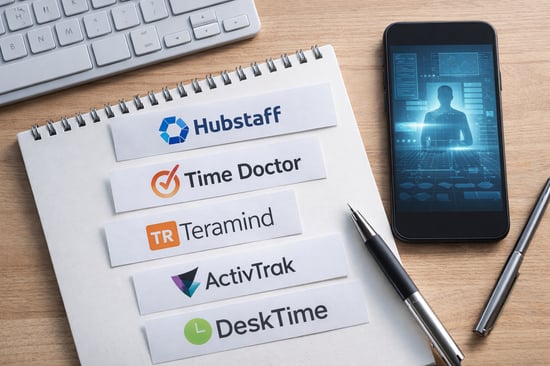 Alongside Kickidler, several other Employee Monitoring Software platforms are commonly used in the industry. Each offers different features depending on business needs.
Hubstaff: This option focuses on time tracking and workforce analytics. It is often used by remote teams and freelancers to track hours and project activity.
Time Doctor: Time Doctor provides productivity monitoring and distraction alerts. It is designed to help companies understand how employees spend their time during work hours.
Teramind: Emphasizing security and insider threat detection, Teramind offers advanced monitoring capabilities for organizations that require strong data protection.
ActivTrak: Behavioral analytics and productivity insights are specialities of ActivTrak. The platform focuses on improving workforce efficiency through activity tracking and reporting.
DeskTime: Known for its automatic time tracking features and productivity measurement tools, DeskTime is particularly popular among small and medium-sized businesses.
These tools reflect different priorities, while Kickidler may appeal more to teams that want a mix of monitoring depth, usability, and visual analytics.
Key Features of Employee Monitoring Software
Most Employee Monitoring Software solutions include a set of core features that help managers track and analyze workforce performance.
Time Tracking
Time tracking allows businesses to measure how long employees spend on tasks and projects. This helps managers allocate resources more effectively and identify productivity trends.
Screen Monitoring
Screen monitoring gives supervisors real-time visibility into employee activities. It can also be used for training, troubleshooting, or workflow analysis.
Activity Logging
Activity logs record application usage, websites visited, and system actions. This data helps identify inefficient processes and potential security risks.
Reporting and Analytics
Detailed reports provide insights into productivity patterns and workforce behavior. These analytics allow management teams to make informed decisions about workflow improvements.
Together, these features make Employee Monitoring Software an essential tool for modern workforce management.
Benefits of Using Employee Monitoring Tools
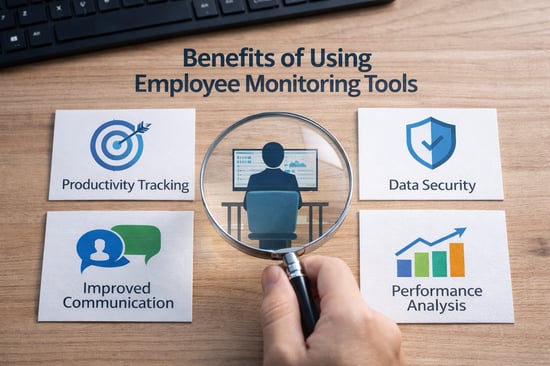 Implementing an effective Employee Monitoring tool can provide multiple advantages for businesses.
Increased Productivity
When employees know their work activity is being tracked, they tend to stay more focused and organized. Monitoring also helps identify inefficiencies and optimize workflows.
Reduced Operational Costs
Better time management and workflow visibility help organizations reduce wasted hours and improve project planning.
Improved Remote Team Management
Remote work tracking software enables managers to supervise distributed teams without intrusive communication or micromanagement.
Enhanced Security
Monitoring systems can detect suspicious behavior, unauthorized data transfers, or policy violations, helping organizations protect sensitive information.
Compliance and Privacy Considerations
Employee monitoring must always be implemented responsibly and transparently. Organisations should clearly communicate monitoring policies to employees and ensure compliance with labour laws and privacy regulations.
Fundz Signal: The Rise of Compliance-Native Oversight
To manage the regulatory burden of workforce monitoring, organizations are turning to automated compliance platforms.
In March 2026, Fundz recorded over $42 million invested specifically in compliance and risk-monitoring software, including Knox Systems' $25M Series A for automated federal compliance tracking and Sigma360's $17M Series B for AI-powered risk screening. This indicates a market shift toward software that builds privacy and audit guardrails directly into the operating system.
Ethical use of Employee Monitoring Software includes informing staff about monitoring practices, limiting data collection to work-related activities, and protecting collected data through secure systems.
Solutions like Kickidler support responsible monitoring by providing clear reporting tools and customizable monitoring settings.
Transparency and Policy Design Shape Adoption
The software choice is only part of the implementation story. Monitoring programs tend to work better when organizations define who can access activity data, what kinds of review are appropriate, how monitoring supports management rather than constant intervention, and what guardrails apply to sensitive information.
That policy layer also affects employee trust. A rollout framed around operational clarity, security, and consistent expectations usually lands differently than one framed only around surveillance, which is why governance and communication deserve as much planning as the vendor shortlist.
Use Cases for Employee Monitoring Software
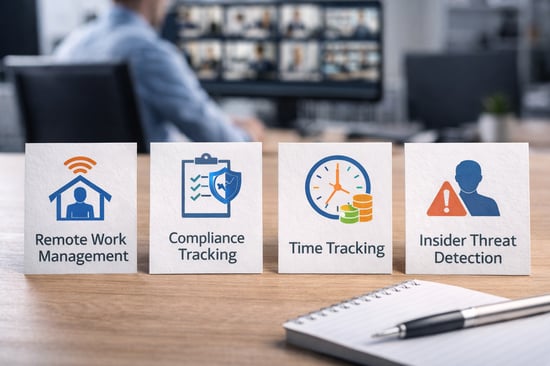 Employee Monitoring Software is widely used across different industries and operational environments.
Remote Work Management
Companies with remote teams use monitoring tools to track productivity and ensure accountability without the need for constant meetings or manual reports.
Project Based Work
Organizations managing complex projects rely on monitoring software to track time usage and optimize task distribution.
Customer Support Centers
Call centers and support teams use monitoring tools to measure performance, improve response times, and maintain service quality.
IT and Technology Companies
Technology firms use monitoring solutions to track development workflows, protect intellectual property, and maintain security standards. These scenarios demonstrate how an effective Employee Monitoring tool supports operational efficiency across many sectors.
Choosing the Right Employee Monitoring Tool
Selecting the best Employee Monitoring Software requires careful consideration of several factors.
Ease of Use: The platform should be easy for both managers and employees to understand.
Scalability: Your chosen system should support business growth and accommodate larger teams over time.
Integration Options: Integration with project management tools and productivity software can improve workflow efficiency.
Reporting Capabilities: Strong analytics and reporting tools are essential for making informed management decisions.
Customer Support: Reliable technical support ensures smooth implementation and ongoing use.
Against these factors, Kickidler may be a strong fit for organizations that prioritize feature depth, ease of use, and advanced monitoring capabilities.
Comparing Monitoring Tools by Operating Need
Buyers usually get a clearer decision when they compare tools by operating need rather than by headline ranking. Some platforms are stronger for lightweight time tracking, some for behavioral analytics, some for security-heavy environments, and some for managers who need a more visual review workflow across remote or hybrid teams.
A practical evaluation process often includes a narrow pilot, a policy review, and a check on how easily managers can turn raw monitoring data into useful action. That approach makes it easier to understand where a prominent option like Kickidler fits while still keeping the selection process grounded in organizational requirements.
Trends and the Future of Employee Monitoring
Workplace monitoring technology continues to evolve alongside changing work environments.
Hybrid work models are becoming the standard for many organizations. As a result, demand for advanced remote work tracking software is growing rapidly.
Artificial intelligence is also beginning to play a role in monitoring solutions. AI powered analytics can automatically identify productivity patterns, detect anomalies, and recommend workflow improvements.
In the future, Employee Monitoring Software will likely become more intelligent, focusing not only on tracking activity but also on helping employees work more efficiently and collaboratively.
An Essential for Managing Modern Teams
Employee monitoring has become an essential part of managing modern teams, particularly in remote and hybrid work environments. The right Employee Monitoring Software provides valuable insights into workforce productivity, operational efficiency, and security.
Among the available solutions, Kickidler remains one prominent option for organizations that want advanced monitoring features, powerful analytics, and a user-friendly interface. By providing real-time visibility and actionable insights, Kickidler helps organizations improve performance while maintaining transparency and ethical monitoring practices.
For companies looking to optimize remote work management and enhance productivity, implementing a reliable monitoring solution that fits policy, reporting, and oversight needs can make a significant difference.
Questions Teams Ask Before Deploying Monitoring Software
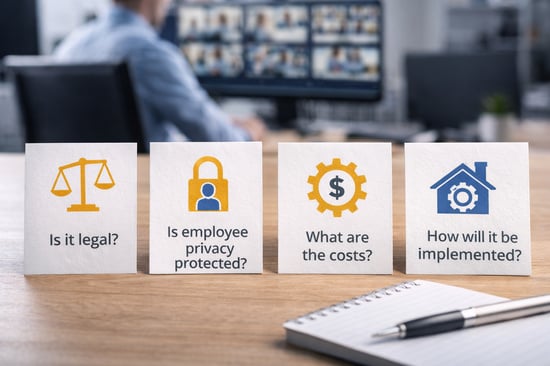
What should companies clarify before selecting a monitoring platform?
Leaders should first define whether the main priority is productivity visibility, security oversight, time tracking, coaching, or compliance support. That decision shapes the actual monitoring depth needed and which teams need access to the data. Without that clarity, vendor comparisons become noisy, and buyers often optimise for features they will not use well.
How do privacy and transparency affect rollout success?
They shape trust, adoption, and the program's legal defensibility. Clear communication about what is monitored, who can review it, and how long data is retained reduces employee uncertainty and helps managers use the software more consistently. A tool may be technically capable, but rollout quality often depends more on policy discipline than on the dashboard alone.
When is deeper monitoring justified versus basic time tracking?
Deeper monitoring usually makes more sense when organizations need workflow reconstruction, security investigation support, or more granular operational review. Basic time tracking can be enough when the goal is simply resource planning, attendance visibility, or project accounting. The right level depends on risk profile, management style, and the amount of evidence leaders actually need to make decisions.
What metrics show whether a monitoring program is actually helping?
Good indicators include reduced workflow bottlenecks, clearer time allocation, faster issue resolution, stronger policy adherence, and shorter manager response times. Organizations should also watch for secondary effects such as fewer manual check-ins, more consistent reporting, or improved coaching conversations. If the system only produces data without changing decisions or processes, the implementation is probably underperforming.
How should leadership compare vendors without over-indexing on one feature set?
A practical comparison starts with operating need, then moves to reporting quality, usability, implementation burden, data handling, and support. Buyers should test how easily a manager can move from raw activity data to an actionable review, because that is where many platforms feel stronger or weaker in real use. This framework makes it easier to evaluate a prominent option like Kickidler without treating any single feature claim as the sole basis for the decision.