 Deals don’t slip for lack of features. They slip when trust stays foggy, and nobody wants to be the person who signs off first. That’s why relationships still outrun clever sequences and polished decks.
In long sales cycles, one candid conversation can do the work of a month of just checking in emails. Tiny moment. Big swing.
Key Points: Client Hospitality That Moves Pipeline
Client hospitality accelerates trust when deals stall—if the experience is matched to the stage, designed for honesty, and tied to a clear next step.
Key points include:
- Stage-fit: Match the experience to the relationship stage and the decision you want next.
- Decision design: Treat the invite like a working session with hospitality baked in—not a disguised pitch.
- Stakeholder alignment: Use the time to surface blockers, power dynamics, and missing voices in the buying committee.
- Momentum mechanics: Measure outcomes via next-step clarity, stakeholder introductions, and reduced vague postponements.
- Follow-through: Ship a recap within 24 hours and lock the next step while the signal is warm.
Proof point: Strategic hospitality reduces “vague postponements” by 30% by surfacing hidden budget and power blockers that formal discovery misses.
The Bottom Line: Hospitality pays off when it produces momentum: clearer risks, stronger alignment, and a specific next step.
Why Client Hospitality Works When Deals Stall
Client hospitality isn’t some VIP medal you pin on people. Call it a release button instead. Get the right two humans out of the stiff conference-room routine, and suddenly you hear what’s really going on: the lurking risk, the internal power plays, the budget calendar nobody wanted to say out loud.
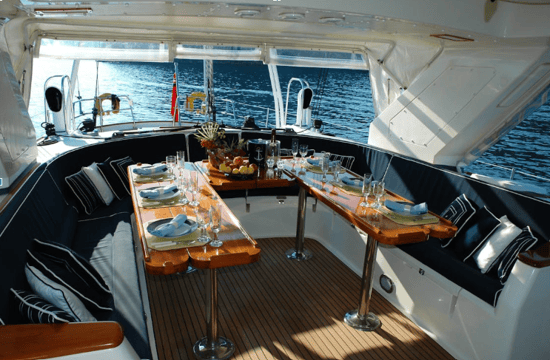
The setting can be humble. Coffee and a walk. A low-key lunch where phones stay face down. Sometimes it’s a higher-touch format that buys you uninterrupted time. For the right account, a half-day on the water, booked through luxury yacht rentals, creates a clean pocket of attention where decision-makers can talk like humans instead of defending their turf.
GetBoat is one option teams use when they need to compare boats, routes, and logistics fast, and then get back to the actual business.
One rule keeps you honest: match the experience to the stage of the relationship and the decision you want next.
When hospitality pays for itself
 Start with the outcome. A specific door you want to open.
Here are situations where hospitality tends to earn its keep, especially in B2B:
- A buying committee is split, and you need the two loudest voices aligned
- A renewal is drifting into procurement, and you want the exec sponsor engaged again
- A deal went quiet, and you suspect a blocker you haven’t met
- A partner says we’re close for the third week in a row
No clear decision on the horizon? Save the spend. Put your time into sharper discovery, cleaner scoping, or a tighter mutual action plan.
Client Hospitality Decision Matrix: Matching Investment to Pipeline Impact
| Deal Size / ACV | Relationship Stage | Recommended Format | Primary Objective | Risk / Red Flag |
|---|---|---|---|---|
| Mid-Market ($) | Early Discovery / Stalled | Coffee or Short Walk | Surface hidden blockers and establish personal rapport. | High overhead relative to deal size; over-serving low-intent leads. |
| Enterprise ($$) | Mid-Funnel / Split Committee | Working Lunch or Dinner | Align the buying committee and resolve internal friction. | Ignoring secondary stakeholders; failing to define a clear next step. |
| Strategic ($$$) | Late-Stage / High Stakes | High-Touch (e.g., Yacht / Private Dining) | Unpack deep political dynamics and finalize executive buy-in. | Turning the event into a pitch; losing the "candid conversation" atmosphere. |
Plan the day so it produces a next step
Think of the invite as a working session with great hospitality baked in. People can smell a logo-stamped circus from a mile away, and once they feel pitched, the walls go up.
Before the day, send a short note that sets the vibe. One paragraph. What you’re trying to unpack, one useful thing you can offer, and what would make them say, “Yep, that was worth it.” Simple and warm.
On the day, this structure is simple and surprisingly effective:
- Warm up with 10 minutes of real catching up.
- Ask one context question that invites honesty.
- Share one concrete insight they can take back inside.
- Agree on the next step: date, owner, deliverable.
Ditch the presentation. If there’s a doc to reference, send it later. A clean recap in plain English will do more work than 12 bullets ever will.
How to tell if it worked
Hospitality measurement doesn’t need a fancy framework. Look at momentum markers you already trust: meeting-to-next-step rate, stakeholder introductions, fewer vague postponements, and a shorter proposal-to-signature timeline.
Then move quickly on follow-through. A short recap within 24 hours, introductions you promised, and a booked follow-up. Momentum is fragile. Treat it that way.
If the relationship feels stronger and the deal is still glued in place, breathe. That’s intel. The account might be stuck behind internal doors, the fit might be off, or your champion might not have the weight you hoped for.
Where the ROI Actually Lands
Client hospitality won’t rescue a messy sales process. In a healthy one, it can build trust faster than email ever will. Pick the moment, design the time like a real conversation, and act on what you learn. The pipeline tends to move after that.
Client Hospitality ROI FAQs
What qualifies as “client hospitality” in B2B without feeling transactional?
Hospitality is any setting that creates real attention and lowers defensiveness—coffee, lunch, a walk, or a higher-touch format when warranted. The rule is intent: you’re creating space to surface truth and align on a next step, not buying goodwill. If the experience can’t be tied to a decision or risk to unpack, it’s usually premature.
When should you use hospitality instead of a regular meeting?
Use it when the deal is stalled for relationship or politics reasons: unclear risks, split committees, or missing stakeholders. If the blocker is purely technical (e.g., feature gaps or integrations), a working session may be better. Hospitality is most useful when you need candor and alignment that a conference room doesn’t produce.
How do you set a budget and approval guardrails for hospitality?
Start with a simple tiering model by account value and stage, with pre-approved ranges and defined sign-off roles. Require a one-sentence objective and a defined “next step” outcome before booking anything. Track outcomes (introductions, MAP progress, timeline movement) so spend stays tied to momentum.
What should happen in the first 24 hours after the hospitality meeting?
Send a plain-English recap that captures what you learned, the risks discussed, and the specific next step with the owner and date. Follow through immediately on any promised intros or materials, because momentum decays fast. If the recap can’t name a next step, treat that as a signal that the account is still blocked.
What are common failure modes, and how do you avoid them?
The big failure is turning the event into a pitch; keep it conversational and insight-led. Another is skipping stakeholder strategy; if the right voices aren’t present, you’ll get warmth without movement. Finally, teams fail by delaying follow-up; treat follow-through as part of the “experience,” not an afterthought.